

How Much Does PPF Cost?
PPF (paint protection film) is a clear or matte urethane film applied to a vehicle’s painted surfaces to absorb rock chips, UV damage and road debris before they reach the paint. The cost depends on four things: how much of the car you cover, the size and body complexity of the vehicle, what condition the paint is in before install, and which film product you choose. There is no flat rate.
At Stratton Motor Cars in Tempe, we build every quote around those four variables. The three coverage tiers we offer are:
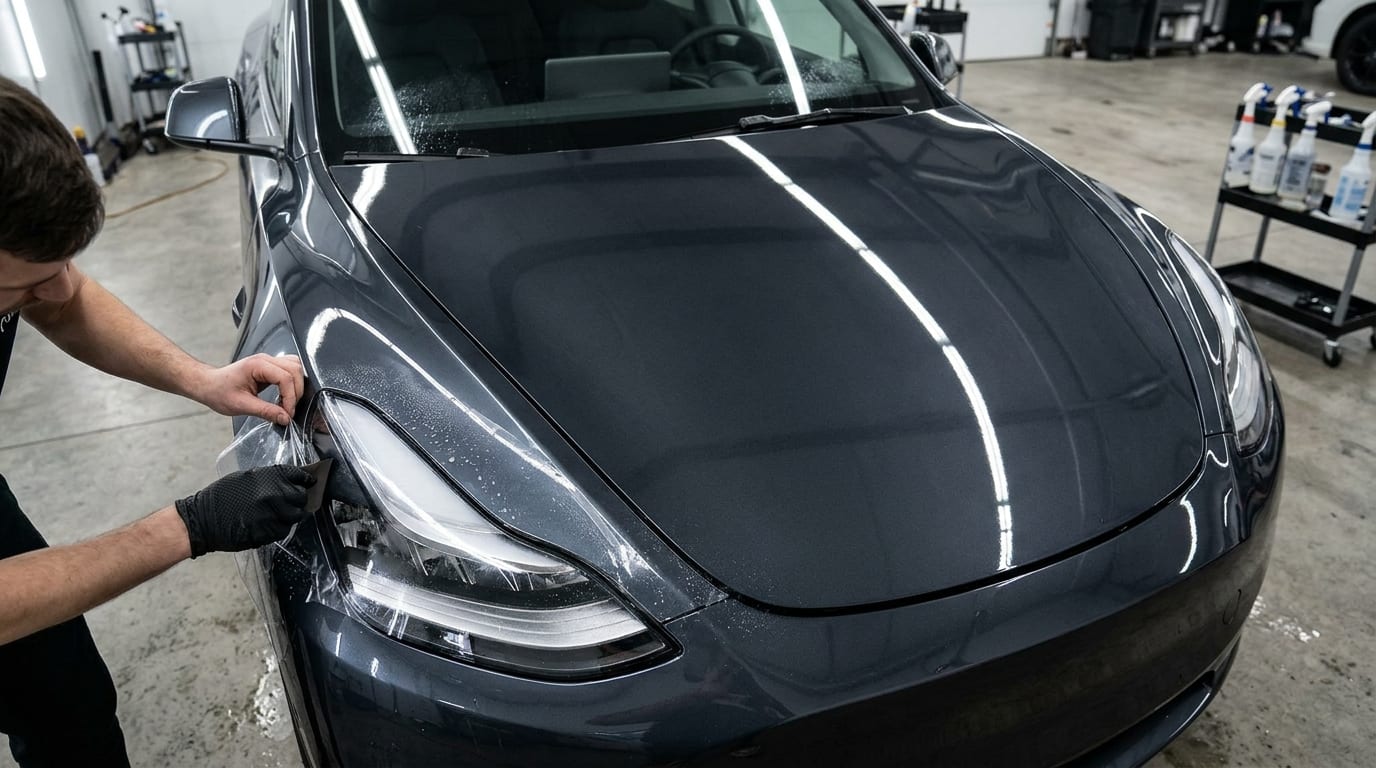
- Partial Front: hood, fenders, mirrors and headlights. The most popular choice for Arizona daily drivers because these panels take the most direct hits from road debris.
- Full Front: everything in the Partial Front package plus the complete front bumper and A-pillars, adding broader protection against highway debris.
- Track and Full Body: the entire vehicle, including rocker panels, rear bumper and trunk edge, for owners who want maximum long-term paint preservation.
Partial-front installs finish within a single day. Full-body installs typically take two to four days, and that additional labor is reflected in the cost. If you spend real time on the 101, 202 or I-10, loose gravel is a constant threat. Rock-chip protection here is a practical decision, not an indulgence.
What Factors Change the Price of a PPF Install?
The final cost of PPF comes down to four main variables: vehicle size and body complexity, pre-existing paint condition, the specific XPEL film product chosen, and the total coverage scope. Each one can meaningfully shift the price of a job.
Vehicle size and body complexity. A McLaren 650S with tight panel gaps and compound curves is a fundamentally different job than a daily-driven sedan. More complex geometry takes more time and skill to wrap cleanly, which is reflected in labor cost.
Paint condition before install. Film is optically clear, which means it also preserves whatever is under it, permanently. If your paint has swirl marks or scratches, those get sealed in the moment film goes down. Paint correction before installation is not optional on a job done right; it is a separate step that adds to the total.
Film product selected. We carry three XPEL PPF products:
- XPEL Ultimate Plus: the flagship film, self-healing, optically clear finish.
- XPEL Stealth: delivers a matte or satin finish, changing the look of the car while protecting it.
- XPEL Armor: a thicker film built for off-road use and heavier-impact conditions.
Each product carries a different price point. Choosing between them should depend on your car, your finish preference and how you use the vehicle.
Coverage scope. Mirrors and headlights only versus full body coverage including rocker panels, rear bumper and trunk edge are very different amounts of material and labor. Scope is the most direct dial you have on total cost. You can read more about the full range of PPF installation options we offer.
What Does Each XPEL PPF Package Actually Cover?
Each coverage tier is designed around a real pattern of use and risk, not an arbitrary good/better/best structure. Here is what physically goes under film in each tier.
Partial Front covers the hood, fenders, mirrors and headlights. These are the zones that absorb the most direct impact from road debris on Arizona highways, which is why this package is the most popular choice among our daily-driver clients.
Full Front extends coverage to include the complete front bumper and A-pillars. For anyone regularly committing to highway miles, this adds meaningful protection to the panels that face oncoming gravel and bug splatter at speed.
Track and Full Body wraps the entire vehicle: every panel, plus the rocker panels, rear bumper and trunk edge. This is the right choice for exotic cars, track builds and owners who want to preserve the paint for the long term without compromise.
A good illustration of full-coverage value is a Viper we protected with PPF and paired with XPEL Fusion Plus ceramic coating to preserve the car’s Copperhead Orange paint. The result, as the owner described it, is a car that still looks brand new. For a unique factory colour that cannot simply be re-shot and matched, that level of protection makes complete sense. For more on how XPEL PPF and ceramic coating work together, see our dedicated write-up.
How Does the PPF Installation Process Work?
The PPF installation process at Stratton follows four steps: paint inspection, paint correction if needed, computer-cut film installation and final edge-to-edge inspection. Skipping any step compromises the result.
Step 1: Consultation and paint inspection. Before anything is ordered or cut, our team assesses the paint condition. The car’s history, current defects and coverage goals all factor into what gets recommended.
Step 2: Paint correction. If the paint shows swirls, scratches or other defects, we correct them first. Film locks in whatever is underneath it permanently, so this step is not negotiable on a quality install.
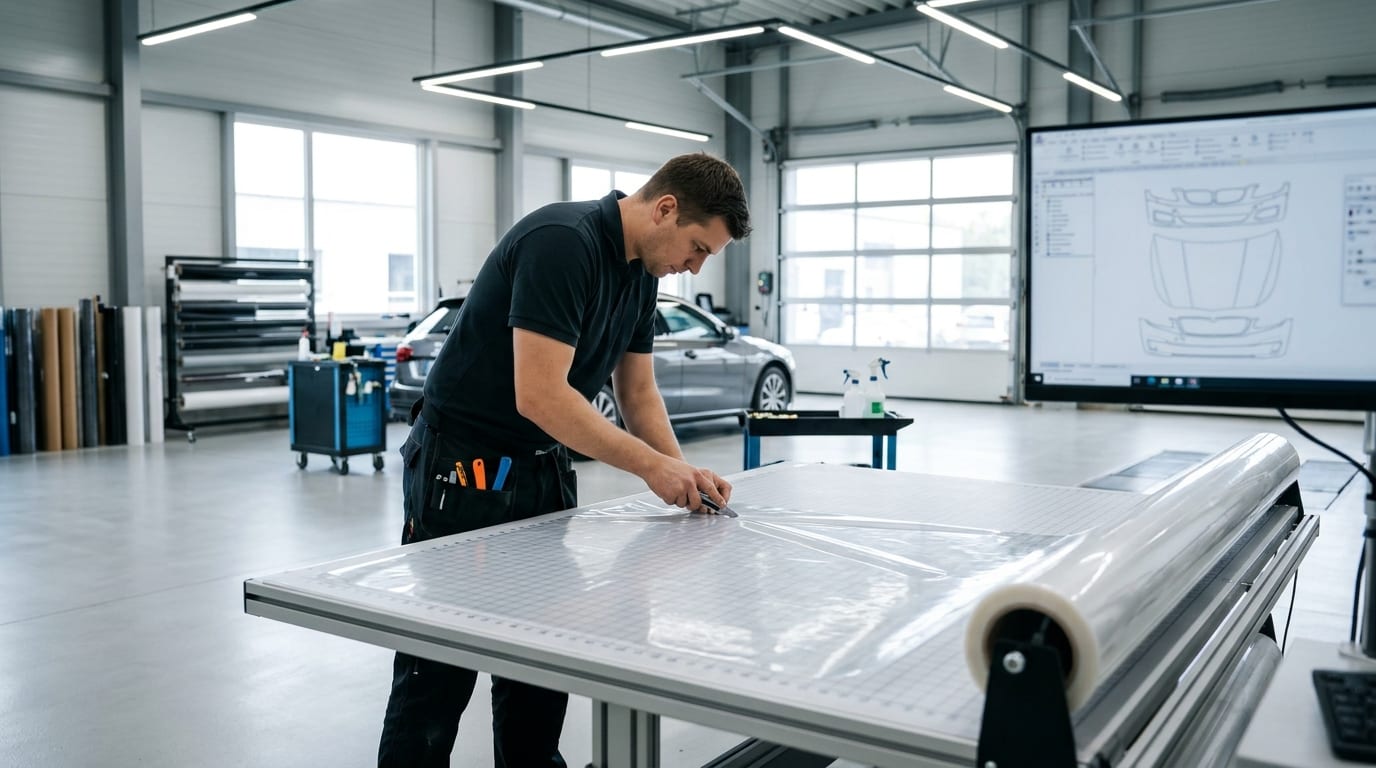
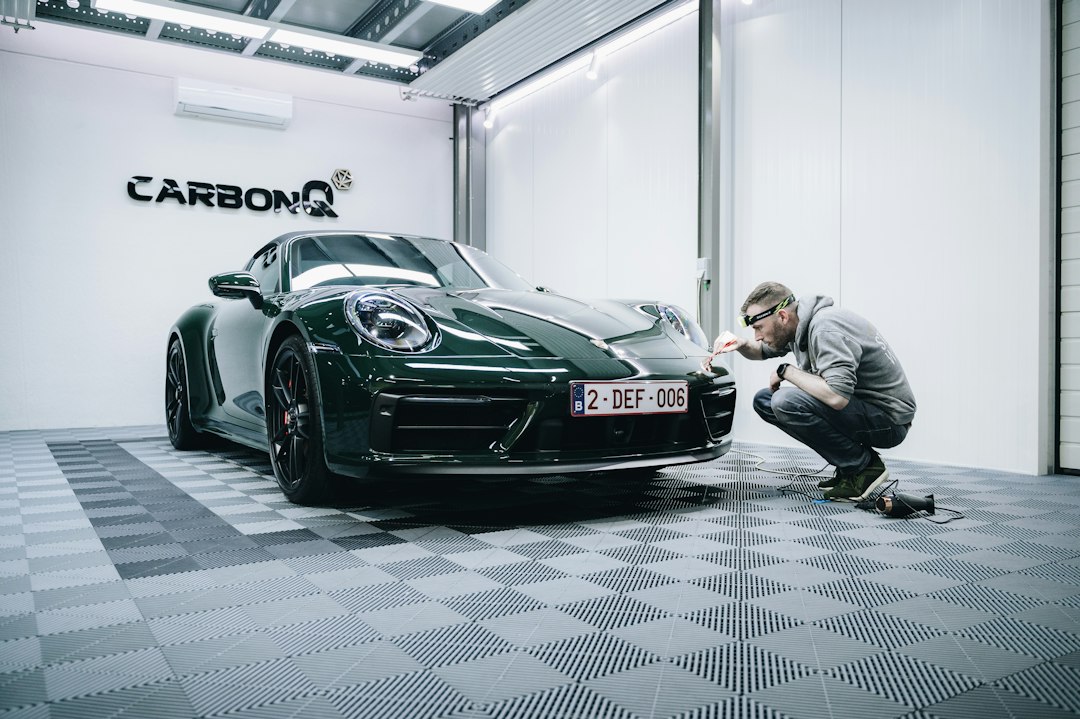
Step 3: Computer-cut installation. Patterns are cut to match the exact make and model of your vehicle, not hand-trimmed on the car. Our technicians were trained directly by XPEL, which means the installation follows the same standards the manufacturer sets. Hand-cutting on the panel risks fit issues and unnecessary blade contact with existing paint.
Step 4: Final inspection. Every edge, seam and panel transition is inspected before the car leaves. The manufacturer warranty on XPEL film typically covers seven to ten years against yellowing, cracking and peeling.
Is PPF Worth the Cost in Arizona?
For Arizona owners, PPF is worth the investment because local conditions are unusually hard on paint. Arizona summer heat bakes clear coat, and the sustained UV intensity here accelerates paint oxidation faster than in most other climates. Film acts as a sacrificial barrier, taking the damage instead of the paint itself. For more detail on how PPF shields paint from Phoenix’s UV conditions, we have broken that down separately.
For European and exotic cars, resale value is closely tied to paint condition. A preserved finish at trade-in time can recover meaningful value. Film is also not a permanent commitment: it can be removed professionally without harming the paint underneath, so it does not lock you into anything.
Pairing XPEL PPF with XPEL Fusion Plus ceramic coating, as we did on the Viper build, adds hydrophobic properties that also make the car easier to keep clean in dusty desert conditions. Dust and debris sheet off rather than bonding to the surface.
How to Choose a PPF Installer in the Tempe and Scottsdale Area
Finding the right installer matters as much as choosing the right film. Here is what to ask before committing to a shop.
- Does the shop do paint correction before installation, or do they film straight over existing swirls and scratches?
- Do they use computer-cut patterns matched to your specific make and model, or are they hand-cutting on the panel?
- Can they clearly explain the difference between self-healing, matte-finish and heavy-duty film variants and when each applies?
- Do they recommend coverage based on how you actually drive, or do they default to pushing the highest package regardless of your situation?
At Stratton, our approach is to start with your car’s condition, your driving habits and your goals, then recommend the product and coverage that fits. No upsells, no guesswork.
Get a PPF Quote at Stratton Motor Cars in Tempe, AZ
We are located at 2420 W 14th St., Suite B, Tempe, AZ 85281, a few minutes from Scottsdale, Chandler, Mesa and Phoenix. Drop-off and pick-up service is available.
Call (480) 234-7354 or email info@strattonmotorcars.com to schedule a consultation and paint inspection. Every quote starts with an honest look at your car’s condition, your driving habits and which XPEL product fits your goal. Clear explanation of what you need and why, every time.
FAQ
Does PPF installation require paint correction first?
Not every car needs paint correction, but if the paint has swirls, scratches or other defects, correction is required before film goes down. PPF is optically clear, which means it seals in whatever is underneath it permanently. Installing over uncorrected paint traps those defects for the life of the film.
How long does a PPF install take?
Partial-front installs typically finish within a single day. Full-body installs generally take two to four days. Paint correction, if needed, adds time before the film work begins. Our team will give you a realistic timeline during the consultation once the car has been inspected.
Can I wash my car normally after PPF is installed?
Wait at least 48 hours before the first wash. After that, hand washing or touchless washing with a pH-neutral soap is recommended. Avoid brush-style automatic car washes. For the first few weeks, skip wax over the film. Clean bird droppings, bug splatter and tree sap promptly, since letting them sit can affect the film surface.


Leave A Comment